

20 Apr Significance of Rural Development
Significance of Rural Development plays a vital role in shaping the future of any nation especially in a country like India where a significant portion of the population still resides in rural areas. Over the few decades the concept of rural development has evolved significantly. Earlier rural development primarily focused on agriculture and basic infrastructure. However modern rural development now encompasses a vision that includes economic growth, environmental sustainability, social equality, healthcare, education and technological advancement.
Significance of Rural Development is not about improving agricultural productivity or building roads. It is about enhancing the quality of life for rural communities. It focuses on reducing poverty improving living standards ensuring opportunities and creating sustainable livelihoods. As India continues to grow rural development has become essential for balanced and inclusive growth.
Understanding Significance of Rural Development
Significance of Rural Development refers to improving the quality of life and economic well-being of people living in areas particularly in remote and underdeveloped regions. It involves a range of activities that aim to enhance infrastructure provide employment opportunities improve healthcare and education and promote sustainable economic growth.
- Modern rural development goes beyond agricultural improvements.
- It includes development, environmental protection, gender equality, skill development and access to modern technology.
- The objective is to empower communities to become self-sufficient and contribute effectively to national development.
Significance of Rural Development also addresses disparities between rural areas.
Urban regions often benefit from infrastructure, employment opportunities and access to education and healthcare.
Rural development aims to bridge this gap and ensure growth across regions.
Evolution of Significance of Rural Development
The concept of development has changed dramatically over the past three to four decades.
Earlier Significance of Rural Development mainly focused on improving output and providing irrigation facilities.
Governments concentrated on building roads providing fertilizers and increasing crop production.
However modern rural development now includes:
- sustainability
- Social inclusion
- Women empowerment
- Education and skill development
- Digital connectivity
- Healthcare access
- Employment diversification
Today rural development programs emphasize sustainable growth while preserving natural resources.
Climate change concerns and resource management have become important components of rural development strategies.
Importance of Significance of Rural Development
Rural development is essential for reasons.
It contributes to growth reduces poverty improves living standards and promotes social equality.
Economic Growth:
Rural areas contribute significantly to the economy through agriculture, small industries and handicrafts.
Improving infrastructure and providing employment opportunities helps increase productivity and economic growth.
Poverty Reduction:
Many rural communities struggle with poverty and lack of resources.
Significance of Rural Development programs aim to create jobs improve wages and enhance stability.
Rural development ensures growth across the country.
Urban areas often receive attention and development compared to rural regions.
- Improved Quality of Life
- Access to healthcare, education, clean water and sanitation improves the living standards of populations.
- Reduction in Migration
- Lack of employment opportunities in areas leads to migration to cities.
- Rural development helps create opportunities reducing migration and urban overcrowding.
Objectives of Significance of Rural Development
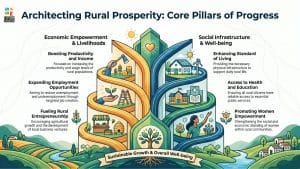
The primary objectives of development include improving the overall well-being of rural populations and creating sustainable growth opportunities.
Some of the objectives are:
- Increasing productivity and wages of rural people
- Providing employment opportunities
- Reducing unemployment and underemployment
- Improving standard of living
- Providing infrastructure
- Ensuring access to education and healthcare
- Promoting women empowerment
- Encouraging agriculture
- Enhancing rural entrepreneurship
These objectives aim to create a self- economically stable rural population.
Primary Purposes of Significance of Rural Development
Increase Productivity and Wages:
One of the goals of rural development is to increase agricultural productivity and wages.
Modern farming techniques, irrigation systems and training programs help farmers improve crop yields and income.
Employment Generation:
Rural development programs aim to create employment opportunities in agriculture, small-scale industries and service sectors.
This reduces unemployment. Improves financial stability.
Reduce Underemployment:
Many rural workers face underemployment due to agriculture.
Rural development encourages income sources such as dairy farming, handicrafts and rural industries.
Improve Standard of Living:
Better housing, healthcare, education and sanitation facilities improve the quality of life in areas.
Provide Basic Needs:
Access to services such as education, healthcare, electricity, clean water and transportation is crucial for rural development.
Major Factors Affecting Significance of Rural Development in India
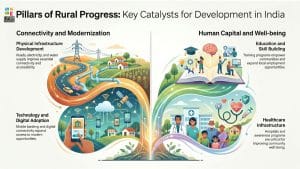
These factors determine the pace and success of rural development initiatives.
Infrastructure Development:
Infrastructure plays a role in rural development.
Roads, electricity, water supply and communication networks improve connectivity and accessibility.
Education and Skill Development:
Education empowers communities and improves employment opportunities.
Skill development programs help individuals learn skills and find better jobs.
Healthcare Facilities:
Access to healthcare improves well-being.
Rural development includes building hospitals, clinics and health awareness programs.
Technology Adoption:
Technology plays a role in modern rural development.
Digital connectivity, mobile banking and online education improve access to opportunities.
Role of Education in Significance of Rural Development
Education plays a role in Significance of Rural Development by empowering individuals with knowledge, skills and opportunities for better livelihoods.
In areas education helps people understand modern agricultural practices improves employability and encourages entrepreneurship.
* Establishing schools in regions ensures that children receive quality education without traveling long distances.
* Scholarship programs also support students from weaker backgrounds enabling them to continue their studies.
* Teacher training programs help improve the quality of education while digital learning initiatives provide access to knowledge through online platforms.
* Vocational training programs equip youth with practical skills such as tailoring, carpentry, computer skills and technical training which create employment opportunities.
* Additionally education raises awareness about health, hygiene, environmental conservation and social equality making rural communities more informed and progressive.
Role of Healthcare in Significance of Rural Development
Healthcare is a component of Significance of Rural Development because healthy communities are more productive and economically stable.
Many rural areas face challenges such as hospitals, lack of doctors and poor medical infrastructure.
Rural healthcare initiatives aim to address these issues by:
* Establishing health centers and providing essential medical services to remote areas.
* Mobile healthcare units play a role in reaching villages where hospitals are not easily accessible.
* Vaccination programs help prevent diseases and improve child health while maternal healthcare services ensure pregnancy and childbirth.
* Nutrition programs also help reduce malnutrition among children and women.
* Improved healthcare facilities reduce mortality rates increase life expectancy and enhance the productivity of rural populations.
Women Empowerment in Significance of Rural Development
Women empowerment is a factor in Significance of Rural Development as women play a vital role in family and community welfare.
Empowering women improves education levels, health outcomes and economic growth in areas.
- Self-help groups enable women to work save money and start small businesses.
- Skill training programs provide women with opportunities to learn skills such as tailoring, handicrafts and entrepreneurship.
- Microfinance support allows women to access loans to start businesses and become financially independent.
- Education programs also encourage women to pursue education and participate in decision-making processes.
- Empowered women contribute significantly to development and social progress in rural communities.
Infrastructure Development in Rural Areas
Infrastructure development is essential for growth and improving living standards.
Proper infrastructure enhances connectivity. Creates economic opportunities in rural areas.
- Rural roads help farmers transport goods to markets and improve access to education and healthcare services.
- Electricity supply supports activities, small industries and households.
- Access to drinking water improves health and sanitation conditions.
- Sanitation facilities reduce disease outbreaks. Promote hygiene.
- Digital connectivity enables access to education, financial services and government schemes.
- Improved infrastructure attracts investments promotes industries and accelerates development.
Agricultural Development and Rural Growth
Agriculture is the backbone of economies and agricultural development is essential for rural growth.
Significance of Rural Development programs focus on:
* Improving productivity and farmer income.
* Modern farming techniques such as mechanization, crop rotation and organic farming help increase yields.
* Irrigation facilities ensure water availability during seasons and reduce dependence on rainfall.
* Crop diversification encourages farmers to grow crops and reduce risks.
* Agricultural training programs help farmers learn technologies and best practices.
* Market access allows farmers to sell their products at prices.
* Improved agriculture increases income reduces poverty and strengthens economies.
Employment Opportunities in Rural Areas
Creating employment opportunities is a goal of rural development.
Many rural populations depend on agriculture, which leads to unemployment during off-seasons.
Rural employment programs promote:
- Small-scale industries
- Handicrafts
- Food processing units
- Dairy farming
- Rural tourism
These industries create jobs. Provide alternative income sources.
Supporting entrepreneurship also encourages individuals to start businesses and become self-reliant.
Employment generation reduces migration to areas and improves economic stability in rural communities.
Technology and Significance of Rural Development
Technology has transformed development by improving access to information and services.
Digital connectivity enables populations to access:
- Education
- Healthcare
- Financial services
Digital education programs help students learn through platforms and virtual classrooms.
Online banking improves inclusion and reduces dependency on traditional banking systems.
Telemedicine allows patients to consult doctors remotely improving healthcare access.
E-commerce platforms help rural entrepreneurs sell products to markets.
Technology empowers communities and promotes sustainable growth.
Challenges in Significance of Rural Development
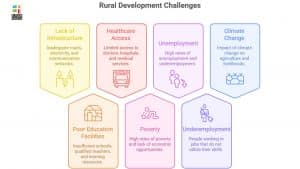
Despite progress Significance of Rural Development faces challenges that hinder growth.
Some of these challenges include:
- Lack of infrastructure
- Poor education facilities
- healthcare access
- Poverty
- Unemployment
- Underemployment
- Climate change
Addressing these challenges requires efforts from governments organizations and communities.
Government Initiatives, for Significance of Rural Development
Governments help areas a lot through different programs and initiatives.
- Rural job schemes give people jobs. Help with their income.
- These schemes are very important for people living in areas.
- Skill development programs help individuals learn skills and make them more employable.
- This is very helpful for people who want to get jobs.
- Agricultural support programs give subsidies, training and resources to farmers.
- Farmers get a lot of help from these programs.
- Infrastructure development initiatives focus on building roads, schools, hospitals and digital connectivity.
These are very important for the development of areas.
Sustainable Rural Development
Sustainable Significance of Rural Development is about growing in a way that does not harm the environment.
It is very important for our future. Sustainable practices include farming without chemicals, saving water using energy and protecting the environment These practices help keep our planet clean. These initiatives help reduce damage and promote responsible use of resources.
We should all try to live in a way.
Role of NGOs in Rural Development
-governmental organizations play a big role in rural development.
They help with education, healthcare and skill development.
- NGOs work with communities to find problems and solve them.They are very helpful in finding solutions.
- They help improve education promote womens empowerment provide healthcare services and create job opportunities.
NGOs do a lot of work.
Future of Significance of Rural Development
The future of development depends on new ideas, technology and sustainable practices.
- Digital villages, farming, renewable energy and rural entrepreneurship are expected to drive growth.These are exciting developments.
- These initiatives will improve infrastructure create job opportunities and make living standards better.This is good news for rural areas.
Rural development is very important today.
It helps reduce poverty improve living standards and promote growth.
- Modern rural development focuses on education, healthcare, infrastructure, employment and sustainability.
These are all important areas.
- Improving areas leads to balanced national development.
When rural areas do well the whole country benefits.
Rural development is not about economic growth It is about empowering people, creating opportunities and building sustainable communities.
Conclusion
Elysium Foundation Significanc of rural development is considered more important in the country today than in the olden days in the progress of the evolution in the nation. As well as, it is a strategy that tries to get improved and productivity, higher socio-economic equality and ambition, and stability in social and also economic development.