


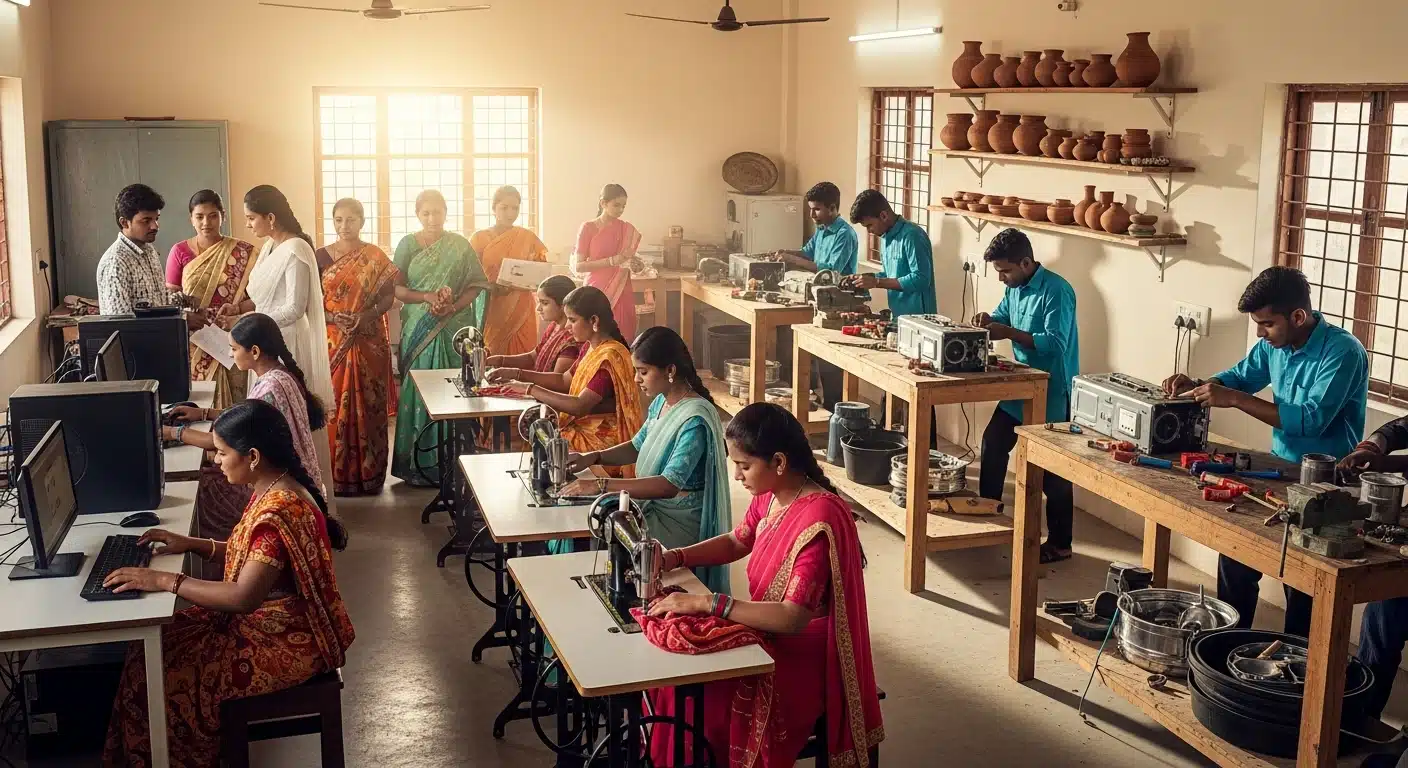
07 Oct Vocational Training in India: Empowering Rural Communities for a Skilled Future
In a rapidly changing world, the value of practical skills has never been higher. While academic education builds knowledge, vocational training bridges the gap between learning and earning. For millions of rural youth, especially in smaller towns and villages, vocational training in India is not just an opportunity—it’s a pathway to dignity, independence, and long-term livelihood.
The Elysium Foundation believes that vocational training in India can unlock the hidden potential of rural communities, reduce unemployment, and build an inclusive economy that leaves no one behind. This blog explores why vocational education is crucial, how it transforms lives, and what the future of vocational training looks like for rural empowerment.
Understanding the Need for Vocational Training in India
India has one of the youngest populations in the world, yet a large section of its youth remains unemployed or underemployed. The problem is not lack of talent—it’s lack of job-oriented skills. Most rural youth finish school without the hands-on expertise employers demand. Here, vocational training plays a crucial role.
In rural areas, opportunities are often limited to agriculture, small trades, and informal work. Traditional education rarely prepares students for these realities. By introducing skill-based programs, vocational training gives learners the ability to earn, innovate, and sustain livelihoods within their own communities.
From tailoring to electrical repair, from carpentry to digital literacy, vocational training provides tangible, market-driven skills that help individuals build sustainable careers without migrating to cities. This directly addresses the unemployment crisis and strengthens local economies.
Bridging the Education–Employment Divide
One of the biggest challenges in India’s education system is the mismatch between what students learn and what the market needs. Vocational training solves this by linking learning directly to livelihood.
Instead of abstract lessons, vocational courses teach practical applications. A rural youth trained in mobile phone repair, for example, can immediately start earning or open a small service center. Similarly, a woman trained in tailoring can establish her own boutique or join a cooperative.
In this way, vocational training in India turns education into employment. It shifts the focus from degrees to skills, from marksheets to mastery. When rural youth gain confidence in their abilities, they not only find jobs—they create them.
The Social Impact of Vocational Training in India
Beyond economics, vocational training has deep social impact. For women, it is a key to empowerment. For families, it ensures financial stability. For entire villages, it builds pride and resilience.
Elysium Foundation’s programs demonstrate that when individuals gain skills, the benefits ripple across generations. Women who learn tailoring, food processing, or computer skills often reinvest their earnings into their children’s education. Youth trained in electrical or plumbing work provide essential services locally, improving quality of life for all.
Through vocational training, rural communities move from dependency to self-reliance. It changes mindsets—from “seeking help” to “creating value.” In the long run, this builds stronger, more confident societies.
Key Sectors for Vocational Training in India
Vocational training is not limited to one trade or industry. The diversity of opportunities in rural India makes the potential enormous. Some of the most impactful areas for vocational training include:
- Agriculture and Allied Activities: Modern farming techniques, organic cultivation, dairy management, and food preservation.
- Textiles and Handicrafts: Tailoring, embroidery, weaving, and craft product design.
- Technology and Digital Literacy: Computer operation, mobile app use, online marketing, and digital payments.
- Construction and Repair: Masonry, plumbing, electrical repair, welding, and solar installation.
- Healthcare and Beauty Services: Rural health assistants, nursing aides, and wellness services.
By expanding into these diverse fields, vocational training ensures that rural youth can find opportunities aligned with both their interests and local demand.
Women Empowerment Through Vocational Training in India
Rural women often face social and economic barriers to education and employment. Vocational training is breaking those barriers. By providing accessible, flexible, and culturally sensitive programs, organizations like Elysium Foundation help women gain independence and respect in their families and communities.
When women earn, families thrive. Their income contributes to better nutrition, healthcare, and schooling for children. A woman trained in tailoring, handicrafts, or digital literacy becomes a role model for others in her village.
This ripple effect transforms gender roles and strengthens the entire social fabric of rural life.
Economic Benefits of Vocational Training in India
The economic returns of vocational training in India are significant. Skilled workers contribute more to GDP, generate local employment, and reduce rural-to-urban migration.
For every youth trained, an entire household benefits. Trained individuals can earn 20–50% higher wages than unskilled workers. Additionally, small enterprises founded by trained youth stimulate local supply chains—tailors need cloth, electricians need tools, and artisans need marketplaces.
By investing in vocational training, NGOs and governments are essentially investing in micro-economic engines that drive sustainable rural development.
Challenges in Expanding Vocational Training
While progress is visible, there are still major challenges in scaling vocational training:

- Accessibility: Many rural areas lack proper training centers and qualified instructors.
- Awareness: Parents and students often see vocational courses as “second-class” education.
- Infrastructure: Poor internet, transport, and electricity hinder training quality.
- Funding: Many programs rely on grants, making them difficult to sustain long-term.
- Placement: Linking trainees to real jobs or markets remains a weak point.
To overcome these, Elysium Foundation and similar NGOs must continue advocating for stronger policies, better infrastructure, and collaboration with private industries that can offer apprenticeships and job placements.
The Role of NGOs in Strengthening Vocational Training in India
NGOs are the lifeline of rural skill development. They reach places where government schemes often struggle to operate effectively.
Elysium Foundation’s model demonstrates how vocational training can be community-centered, locally relevant, and sustainable. By aligning training programs with actual village needs—such as handicrafts, agro-based enterprises, and digital skills—Elysium ensures that participants not only learn but also earn.
Partnerships with local employers, microfinance institutions, and women’s self-help groups further expand the reach and impact of vocational training . Continuous mentoring, alumni networks, and entrepreneurship support help graduates maintain long-term success.
Future Trends in Vocational Training in India
The future of vocational training is bright—and digital. As technology penetrates even the most remote villages, online learning and hybrid models are becoming powerful tools for scaling access.
Micro-learning modules, mobile apps, and virtual classrooms make it easier for rural youth to learn anytime, anywhere. Augmented and virtual reality can simulate real-life scenarios—from welding to medical training—without expensive equipment.
Government and industry collaboration will also drive innovation. As India moves toward becoming a $5-trillion economy, vocational training will be at the core of that transformation—ensuring that every citizen, regardless of location, can contribute to national growth.
Recommendations for Strengthening Vocational Training in India

- Market-Driven Curriculum: Design courses based on local and regional demand.
- Trainers’ Capacity Building: Train the trainers to ensure quality and consistency.
- Digital Integration: Use technology for monitoring, evaluation, and flexible learning.
- Women-Focused Programs: Provide safe spaces, childcare, and gender-sensitive modules.
- Public–Private Partnerships: Combine NGO experience, government support, and industry needs.
- Sustainability: Encourage self-funded centers through production units or service fees.
- Career Pathways: Create lifelong learning routes—basic, advanced, and specialized training.
- Awareness Campaigns: Promote success stories to change social perceptions.
These steps will make vocational training in India more inclusive, scalable, and effective for long-term development.
Why Elysium Foundation Believes in Vocational Training in India

At Elysium Foundation, we see firsthand how skills transform lives. In every village we work with, vocational programs create ripples of progress—young men fixing electrical lines, women designing clothing, farmers processing produce for higher profits.
Our mission is to ensure that vocational training in India becomes accessible to every person with the will to learn. We believe skills are not just tools—they are keys to unlock human potential.
When communities learn to sustain themselves through skill and creativity, dependence turns into empowerment. This is the true spirit of vocational training.
Frequently Asked Questions
1. What is the main purpose of vocational training in India?
The main purpose of vocational training is to equip people with practical, job-ready skills for better employment and self-reliance.
2. How does vocational training in India benefit rural youth?
Vocational training helps rural youth gain employable skills, start small businesses, and earn a stable livelihood within their communities.
3. What are the most popular courses in vocational training in India?
Popular courses in vocational training include tailoring, computer skills, electrical work, handicrafts, and mobile repair.
4. How does vocational training in India empower women?
Vocational training empowers women by providing income opportunities, financial independence, and greater social confidence.
5. What is the future of vocational training in India?
The future of vocational training is digital, inclusive, and skill-driven, creating jobs and entrepreneurship across rural areas.
Conclusion
As India moves forward in the 21st century, education alone cannot guarantee progress. We need an education that works—one that connects minds, hands, and hearts. That is exactly what vocational training in India offers.
For rural youth, it means opportunity. For women, it means empowerment. For the nation, it means growth rooted in equality and sustainability.
By supporting initiatives like those led by Elysium Foundation, you contribute to a future where every Indian—rural or urban—can dream, learn, and earn with pride. Together, we can make vocational training in India the foundation of a stronger, more inclusive economy.
No Comments